Bad Night's Sleep, Lower IQ Score?
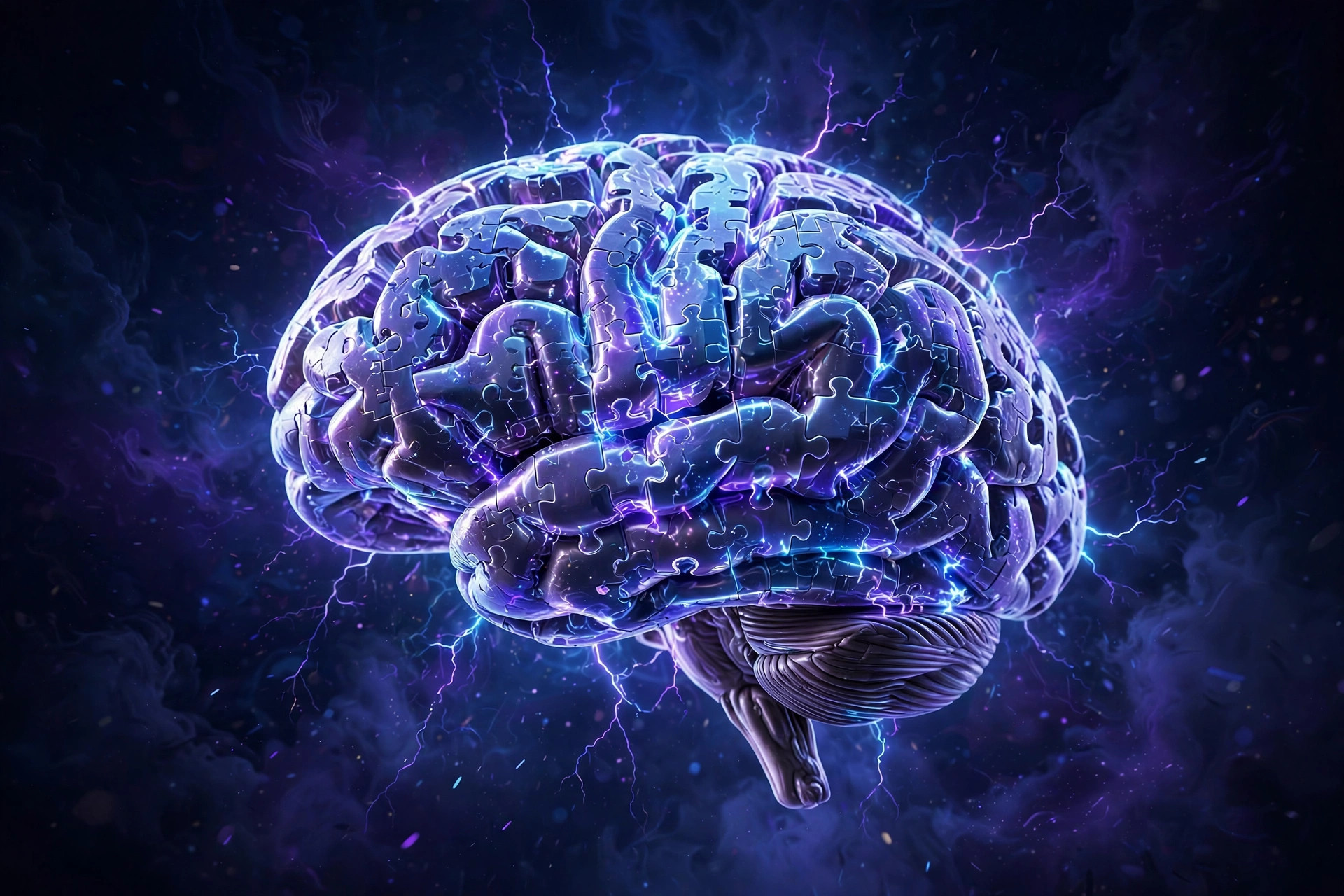
You can't cram for an IQ test — but you can absolutely sabotage one. One bad night's sleep can quietly cost you more points than weeks of practice buy you. Retaking a test adds roughly 4 to 8 points through familiarity, as our practice-effect guide shows. A sleepless brain can hand a similar number right back. Sleep is the most underrated test-prep variable there is, and the research on it keeps getting sharper — including new 2026 brain-imaging work showing what "half asleep" looks like at the level of brain fluid.
Sleep loss doesn't hit everything equally
A landmark meta-analysis by Lim and Dinges (2010), published in Psychological Bulletin, pooled 70 studies and 147 cognitive tests of short-term sleep deprivation and asked a precise question: which mental functions actually break first?
The damage wasn't uniform. Simple attention — vigilance, catching signals quickly — took the biggest hit (effect size −0.78 for attention lapses, a large effect). Working memory accuracy fell substantially (−0.55). Reasoning accuracy on more complex tasks moved least (−0.13, a small and statistically shaky effect). Overlearned, crystallized knowledge — vocabulary, facts — was largely spared.
That pattern maps directly onto how IQ tests work. Timed matrix puzzles, digit-span tasks, figure rotation — these are attention- and working-memory-hungry. The functions sleep loss hurts most are exactly the functions a test leans on, as our fluid vs crystallized breakdown shows. Vocabulary-type items may survive a rough night; the timed reasoning items won't. So a sleep-deprived score can look like a different person took the fluid-reasoning half of the test.
2026: your brain is half asleep while you're awake
In early 2026, an MIT team led by Laura Lewis published a striking explanation of why attention fails after a sleepless night (Yang, Z., Williams, S. D., Beldzik, E., Anakwe, S., Schimmelpfennig, E., & Lewis, L. D., 2025, Nature Neuroscience, 28(12), 2526–2536).
They studied 26 healthy adults (average age 25.6), each tested twice — once after a full night's rest and once after a night of total sleep deprivation monitored in the lab. While participants performed a vigilance test inside a fast fMRI scanner, the team tracked brain activity, blood flow, cerebrospinal fluid (CSF) movement, and pupil diameter second by second.
The finding: when sleep-deprived participants missed a signal, their brains were running sleep physiology in the middle of wakefulness. Large, slow waves of cerebrospinal fluid — the kind normally seen during deep sleep's "brain washing" — intruded into waking moments. The wave power during a lapse was statistically similar to what the researchers measured during N2 sleep (24.50 dB vs 24.80 dB). About two seconds before each documented lapse, attention dropped and the pupil constricted; then a large outward pulse of CSF followed. As attention returned, the pupil dilated and the fluid flowed back. EEG showed suppressed electrical activity in the alpha–beta range (10–25 Hz) — a signature of cortical shutdown.
Honest caveat, from the researchers themselves: whether these fluid pulses actually clean waste or are simply the brain's way of signaling sleep pressure is unresolved. But the practical point stands — a sleep-deprived test-taker's brain is literally flickering between sleep and wake, one lapse at a time.
Another 2026 finding: sleep spindles track reasoning ability
A 2026 meta-analysis in Frontiers in Sleep looked at sleep architecture itself and found that faster sleep spindles — brief 0.5-to-3-second bursts of brain activity during non-REM sleep — were linked to greater cognitive ability. Denser, faster spindle patterns tracked better reasoning scores, and the link appeared strongest in adults and older adults.
Spindles are thought to be involved in memory consolidation — the process of stabilizing what you learned during the day. This finding doesn't mean "sleep your way to a higher IQ" (it's correlational, and nobody has shown you can train spindles up and watch your score rise). What it does tell us is that reasoning ability and sleep quality run on shared hardware. Your test score reflects not just your brain but the condition of its night shift.
Can you rescue a ruined night? Exercise or a nap — both beat nothing
If the night already went badly, a McGill University study published in Proceedings of the National Academy of Sciences in September 2026 offers genuinely practical news. Researchers kept 54 healthy young adults awake for 30 straight hours under lab supervision, then split them three ways: a 20-minute moderate-to-vigorous cycling session, a 90-minute nap, or nothing at all. Three days later, they tested everyone's memory for images viewed right after the intervention. The exercise and nap groups remembered roughly 22% more than the control group.
Senior author Marc Roig's take, in plain terms: you can't always get more sleep, but a short bout of exercise can protect at least some cognitive function. A 20-minute brisk walk or bike ride before a morning test isn't a folk remedy — it's a tested intervention. Same for a proper nap, though on test day you'll want it short to avoid groggy sleep inertia.
The test-day sleep playbook
Here's how to put all of this together before your next test — the full strategy lives in our IQ test prep guide:
1. Treat sleep as a week-long variable. Sleep pressure and circadian rhythm don't reset overnight. Keep a consistent bedtime for the week before the test, not just the night before.
2. Never sacrifice sleep for cramming. Memory consolidation happens during sleep, so all-night review is a net loss — you trade the consolidation window for weaker material. Our 2026 research roundup keeps hammering the same theme: the boring fundamentals beat the clever hacks.
3. If the night went badly, move first. Bright light in the morning, 20 minutes of brisk walking or cycling, and a short nap if you have time. These don't fully replace sleep — nothing does — but the McGill data says they beat muscling through.
4. Schedule the test at your peak. Most people are sharper mid-morning than at dawn or late night, and chronotypes differ. If you can choose, pick your best alertness window. Two hours of good sleep plus the right time slot beats eight hours followed by a groggy test.
Go deeper with AI
This article is the starting point. Copy any of these prompts into your favorite AI assistant to learn more about sleep and IQ test scores:
🔎 Build a 7-day sleep-first plan for your test date
I'm taking a timed cognitive test on [date] at [time of day]. My chronotype: [morning person / night owl / somewhere in between — describe when you naturally feel alert]. Build me a 7-day plan with: (1) a target bedtime/wake schedule that shifts gradually toward test day, (2) morning light-exposure timing and last-caffeine cutoff each day, (3) a contingency protocol for the night before if I sleep badly (short nap rules, 20-minute exercise option based on the McGill 2026 findings, sleep-inertia avoidance), and (4) a morning-of-test timeline from wake-up to first question. Base the reasoning on sleep-pressure buildup, circadian alertness rhythms, and the Lim & Dinges (2010) finding that attention and working memory — not crystallized knowledge — are the most sleep-vulnerable functions.
🧭 Estimate how much a bad night cost your score
Here are my test details: [test name, my score, date] — and my sleep the night before: [hours slept, sleep quality, e.g. restless/solid]. I also have a rested comparison score: [test name, score, date] (or "no rested comparison available"). Using the research on sleep and cognition (Lim & Dinges 2010: attention lapses hit hardest, working memory next, reasoning accuracy least; vocabulary/crystallized knowledge largely spared), tell me: (1) how much of my score gap is plausibly sleep-related versus practice effect or noise, (2) which item types probably suffered most given the test's format, and (3) whether retaking under rested conditions is likely to give a more honest number — and what to change before the retake.
💡 Night-owl survival guide: schedule the test to match YOUR brain
I'm a strong night owl: I naturally fall asleep around [time] and feel sharpest around [time]. I have to take an online timed IQ test, and I can take it any time in a 48-hour window starting [date/time]. Using what research says about chronotypes, circadian alertness peaks, and the sleep-deprivation hierarchy (attention and working memory degrade before reasoning accuracy), recommend: (1) the best 3-hour window to take the test, (2) how to shift my sleep across the 3 days before without an all-nighter, and (3) what NOT to do (e.g. caffeine timing traps, late-afternoon naps that backfire). Keep every claim tied to published research, and flag where evidence is thin.
Tip: replace the bracketed parts with your own situation — the more specific your prompt, the more useful the answer.
The short summary
A bad night's sleep degrades IQ test performance, and the damage is targeted: Lim and Dinges' (2010) meta-analysis of 70 studies found simple attention took the largest hit (effect size −0.78), working memory fell substantially (−0.55), while reasoning accuracy and crystallized knowledge were much less affected — and attention-heavy timed items are exactly what IQ tests lean on. New 2026 research explains the mechanism: MIT brain imaging showed sleep-deprived brains flicker into sleep physiology mid-task, with CSF waves during attention lapses matching N2-sleep intensity; a Frontiers in Sleep meta-analysis linked faster sleep spindles to greater cognitive ability; and a McGill study found 20 minutes of exercise or a 90-minute nap restored roughly 22% of lost memory after 30 hours awake. Practical bottom line: protect sleep the whole week before a test, never trade sleep for cramming, and if the night went badly, bright light, a 20-minute brisk workout, or a short nap beats muscling through.
The single most important point: sleep is not rest for your brain — it is the maintenance window your brain needs to show up at full power. The number you get on test day is your ability times your sleep state, and no amount of strategy compensates for a night-shift brain running on empty.
Want better prompts, in your inbox?
One sharper AI prompt + one new brain training and IQ topic every week. Free forever, unsubscribe anytime.
We never share your email. One email a week, that's the deal.
Try the IQ Challenge
Reading about intelligence is fun — testing your own logic is more fun. Take the free 25-question timed quiz and get your estimated IQ and percentile instantly.
Keep exploring: read how to prepare for an IQ test, see how IQ tests actually work, compare fluid vs crystallized intelligence, and browse the 2026 IQ research roundup.
For entertainment only — this guide is for fun and general information, not a clinical or professional assessment.
© FUNGWA 峳華 LLC (fēng huá — “peaks of splendor”)